Video Projection
This is the book dedicated to all things concerning projection of images.
If you are looking for information regarding projection mapping look here: Projection Mapping
Video Art
Pipilotti Rist

Pipilotti Rist (born Elisabeth Charlotte Rist in 1962 in Grabs, Switzerland) is a pioneering Swiss visual and video artist whose groundbreaking work in experimental video and immersive installations has been influential since the mid-1980s and continues today. Rist began making art videos and films while studying art and design in Vienna and Basel in the early 1980s, and by the late 1980s she was already exhibiting internationally, with major recognition coming throughout the 1990s with works such as Ever Is Over All (1997) and Sip My Ocean (1996). Her work — vibrant, surreal, and deeply sensory — blends color, sound, and space to explore the body, emotion, gender, and perception, inviting viewers into environments that transform traditional gallery experiences. Rist remains an active and influential figure in contemporary art, with exhibitions and new projects continuing into the 2020s.
Works:
- I'm Not the Girl Who Misses Much link
- Ever Is Over All link
- Pipilotti Rist - Ever is Over All, 1997 - YouTube link
- Pipilotti Rist; 'Sip my Ocean' - YouTube link
- Pipilotti Rist - Ever Is Over All (excerpt) - YouTube link
More info:
- youtube: Meet the trailblazing visual artist Pipilotti Rist (2:35 min)
- youtube: https://www.youtube.com/watch?v=k1vZgXYioTs
Bill Viola
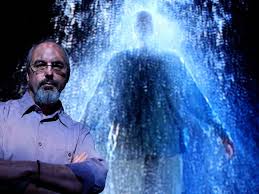
Bill Viola is a pioneering American video artist whose career, beginning in the late 1970s and continuing today, explores the depths of human experience, including life, death, and consciousness. Known for his immersive video installations, Viola uses slow motion, sound, and light to create profoundly emotional and meditative experiences that draw viewers into a heightened awareness of the present moment. His works, such as The Crossing (1996), where a figure is engulfed by fire and water, and The Reflecting Pool (1977–79), which plays with perception and time, exemplify his ability to bridge technology and spirituality, inviting audiences to reflect on themes of birth, transformation, and the passage of time.
Works:
More Info:
- Bill Viola home page link
- Bill Viola Wikipedia link
- Bill Viola Interview: Cameras are Keepers of the Souls - YouTube link
Nam June Paik
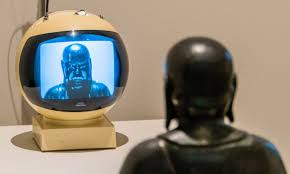
Nam June Paik (1932–2006) was a pioneering Korean-American artist and a central figure in the development of video art. In the 1960s, he began experimenting with televisions and video cameras, creating playful and provocative works that blurred art, music, and technology. Notable pieces include TV Buddha (1974), where a Buddha watches its own image on a live video screen, and Electronic Superhighway (1995), a vibrant, immersive installation mapping the United States with neon and video screens. Paik’s inventive approach reshaped how artists think about media and continues to inspire experimentation today.
Works:
- Nam June Paik: Electronic Superhighway - YouTube link
- Nam June Paik - Global Groove, 1973 - YouTube link
- Nam June Paik, "Art in Process" featuring Joseph Beuys video performance, Gagosian gallery NYC 2022 - YouTube link
More Info:
- Nam June Paik link
- Father of Video Art - Nam June Paik - full interview c. 2000 by Paul Tschinkel - YouTube link
- Nam June Paik: Art in Process | Gagosian Quarterly - YouTube link
Pepper's Ghost
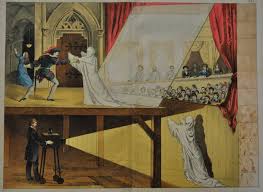
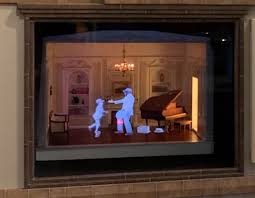
Pepper’s Ghost is a classic illusion technique developed in the 19th century that uses angled glass or transparent plastic to make objects or people appear ghostlike within a physical space. By reflecting a hidden subject into the viewer’s line of sight, it creates the impression of floating or disappearing figures, blending reality and illusion. Originally popular in Victorian theater, Pepper’s Ghost is still used today in exhibitions, concerts, and installations, and has become an important reference for artists exploring perception, projection, and mixed reality.
Pepper’s Ghost works by reflecting a hidden object or video off a sheet of angled glass or transparent plastic, making it appear as if the image exists in the same physical space as the viewer. By carefully controlling lighting and reflection, the projected subject looks ghostlike—able to fade in, move, or disappear.
Examples
- The strange legacy of Tupac’s ‘hologram’ lives on five years after its historic Coachella debut - Andscape link
Information
- Wikipedia pagina link