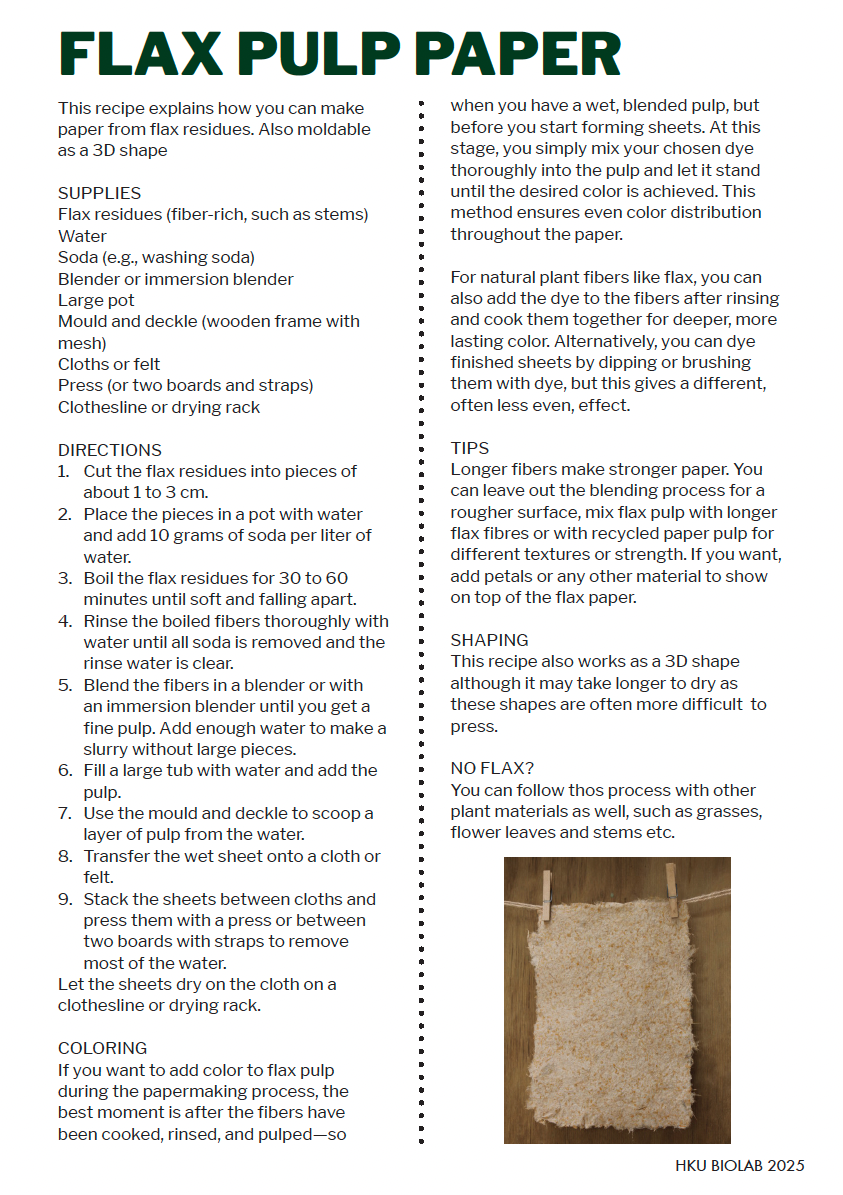
Plant and fungi paper making
Cellulose fibres of foraged or withered plants, as well as the chitin fibres of mushrooms can be transformed into paper-like and sculptural materials. This book features several recipes that will get you going. Be advised though that as is common for all bio-based materials, you will need to take the time to engage yourself in the process, the quality of your results will grow with practice and experimentation.
Mould and deckle
If you are new to paper making in general and want to get an overview of the process, have a look at Makezine: Paper Making 101, which also explains how to make your own mould and deckle, as does this tutorial by paperslurry. You can see which suits your needs.
Preparation of fibres
Whereas the process of using a mould and deckle to create the paper is the same in the plant paper making process, plant fibres need to be prepared for the process by boiling them in soda for at least an hour. This is needed to break down non-cellulose materials such as lignin, waxes, sugars, starches, and gums that can prevent the fibers from bonding well when forming sheets of paper. Mushrooms, especially the polypores often favoured for paper-making, need to be soaked for at least a couple of days or weeks to soften enough to be processed.
Working with the recipes
The recipes features here are not the only way to do it, but we chose them as a useful first step. There are different choices to be made at any step that will render other results, don't be afraid to experiment!
Grass paper
Grass paper
Recipe by Gabriella Timanti. This can result in a flat sheet of paper or molded in a 3D shape, as depicted below. 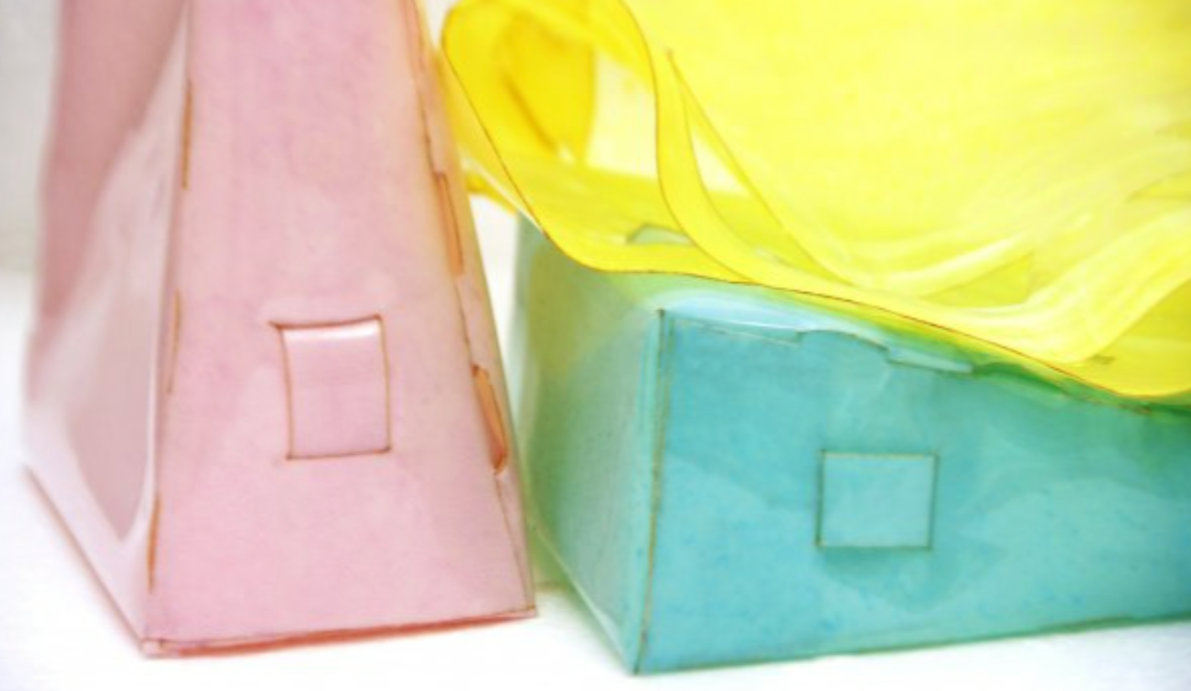
Tools:
- Hot plate
- Cooking pot
- Spoon
- Flat surface
- Blender
- Rolling pin
- Drainer / strainer
- Large rectangular tub
- Mould and Deckle
- Cloths
- Some type of weight (heavy books do well)
Ingredients:
- Water 10 kg / L
- Grass 1 kg
- Soda ash 10 gr (washing soda, sodium carbonate Na2CO3)
Method:
- Boil the grass (freshly cut or not) in water with soda ash for 1-2 hours. Stir occasionally.
- Drain grass.
- Beat the grass with a rolling pin/mallet hammer or similar until slightly pulpy.
- Fill a large tub with water until about half full.
- In your blender, put a bit of water and grass until it becomes a pulp. Empty into the tub after each go.
- If you want, add petals or any other material you with to show on top of the grass paper.
- Swish your hand through the water to make sure the fibres are evenly spread through the water.
- Using the mould and deckle, whilst holding firmly, scoop up some pulp and hold horizontally until the water has drained through back into the tub.
- Flip onto a cloth and peel the deckle off. Then place another cloth on top.
- Repeat steps until you feel you cannot make anymore sheets.
- Lay a heavy weight on top of the sheets for 20 minutes.
- Then, remove the weight and place the paper sheets spaced out on a flat surface (or a mould if you want to achieve shape), so they can dry out.
Flax pulp paper