Multiplane Cabinet
The multiplane cabinet is a hybrid analogue and digital set-up to experiment with print and physical materials combined with digital image processing and capturing. The set-up is accompanied with a materials cabinet.
Instruction on how to start and use the multiplane cabinet
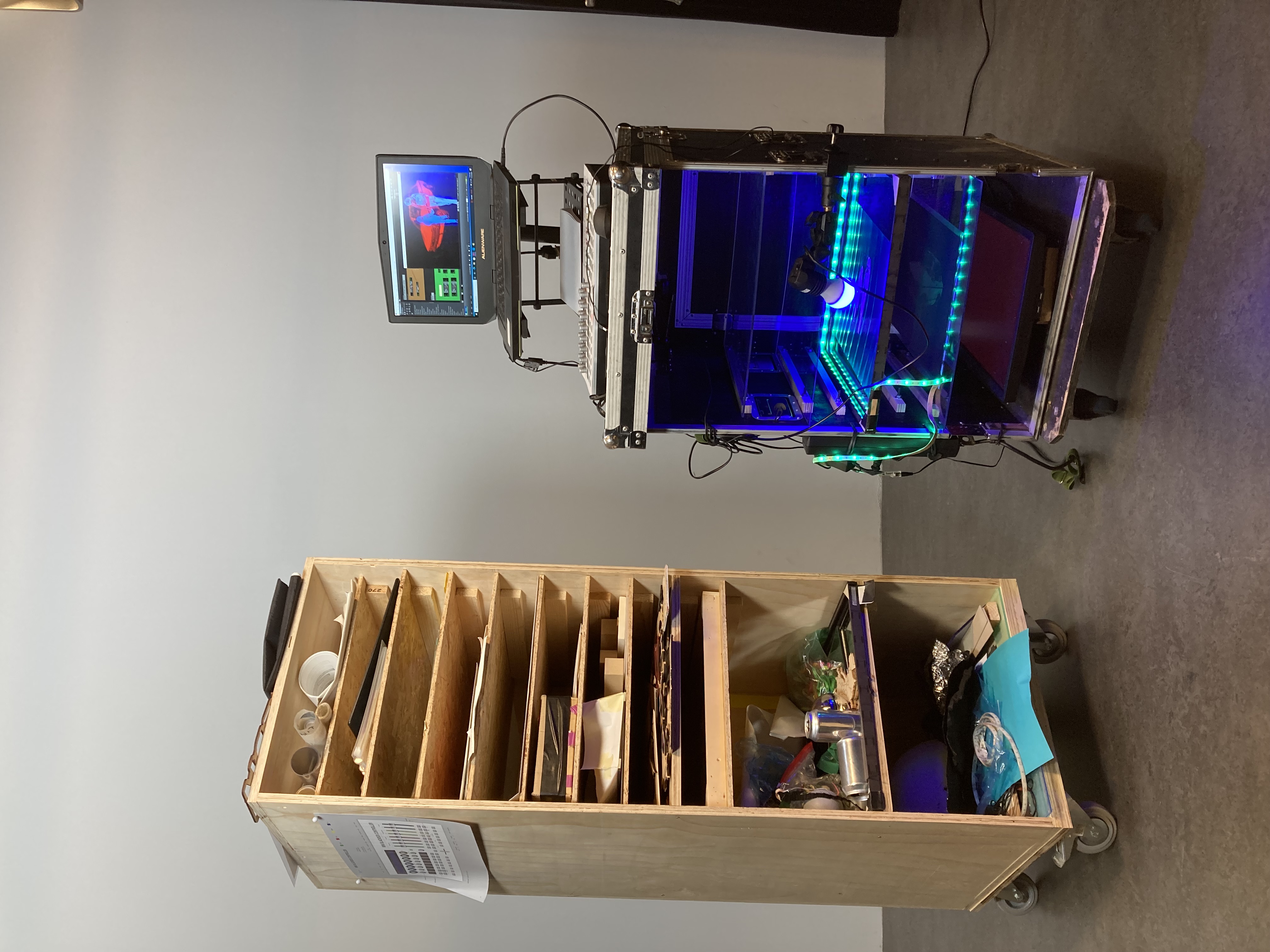
1 Powering up
Connect the power strip power cord of the cabinet to a power point and switch on the power strip
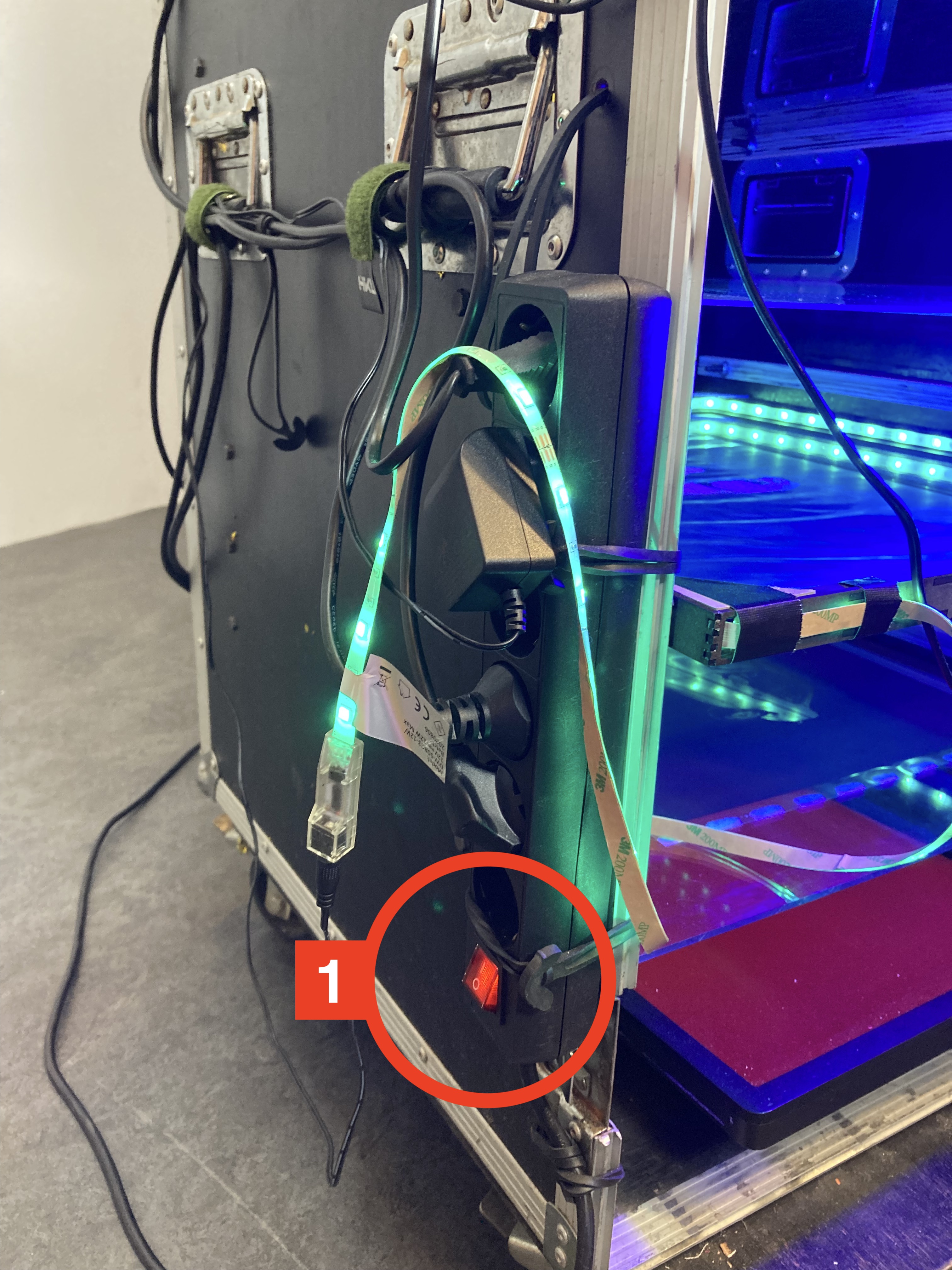
2 Led light
Turn on the LED strip (2a) and LED lamp (2b) with the corresponding remote controls
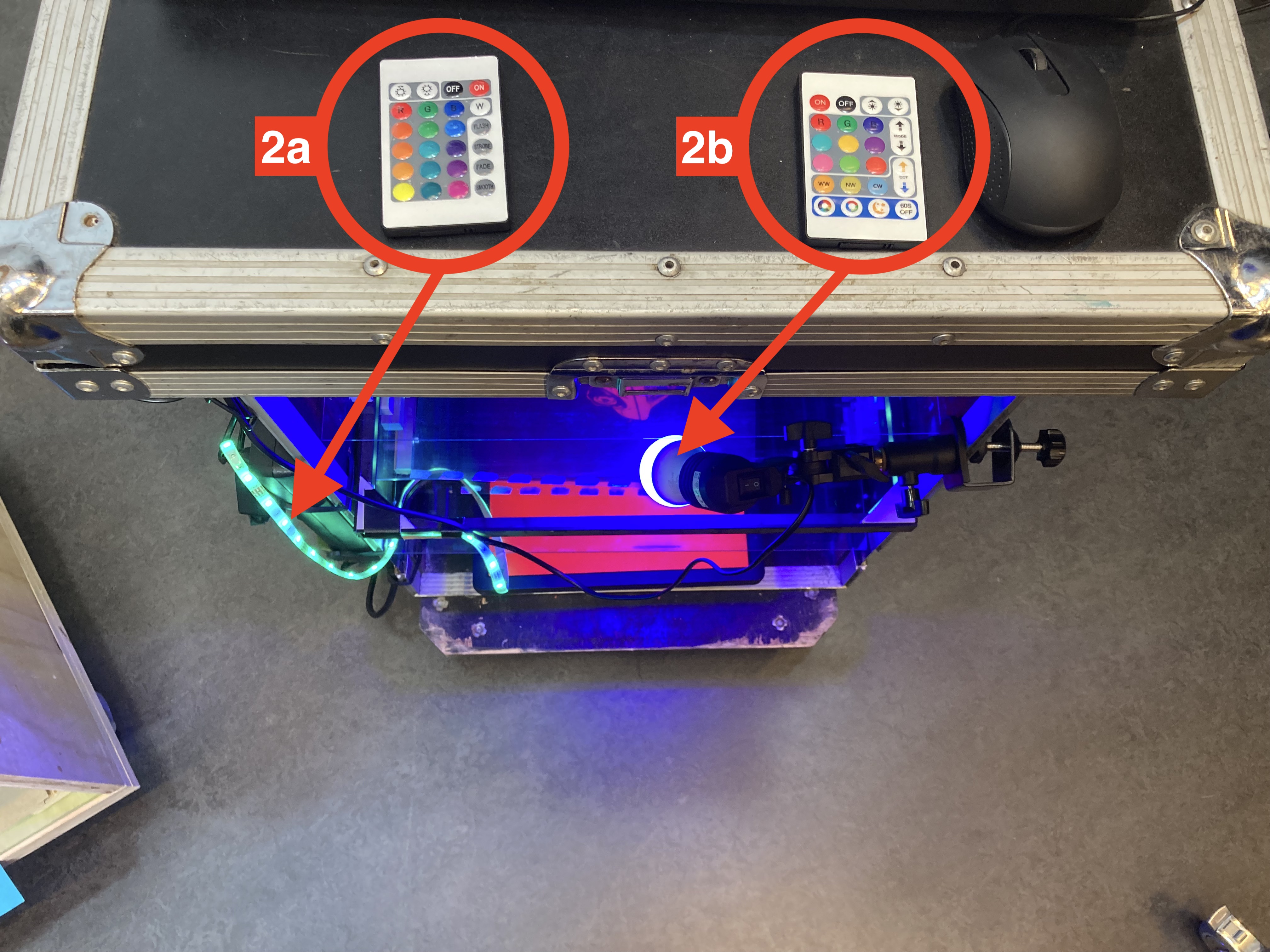
3 start up computer and run software
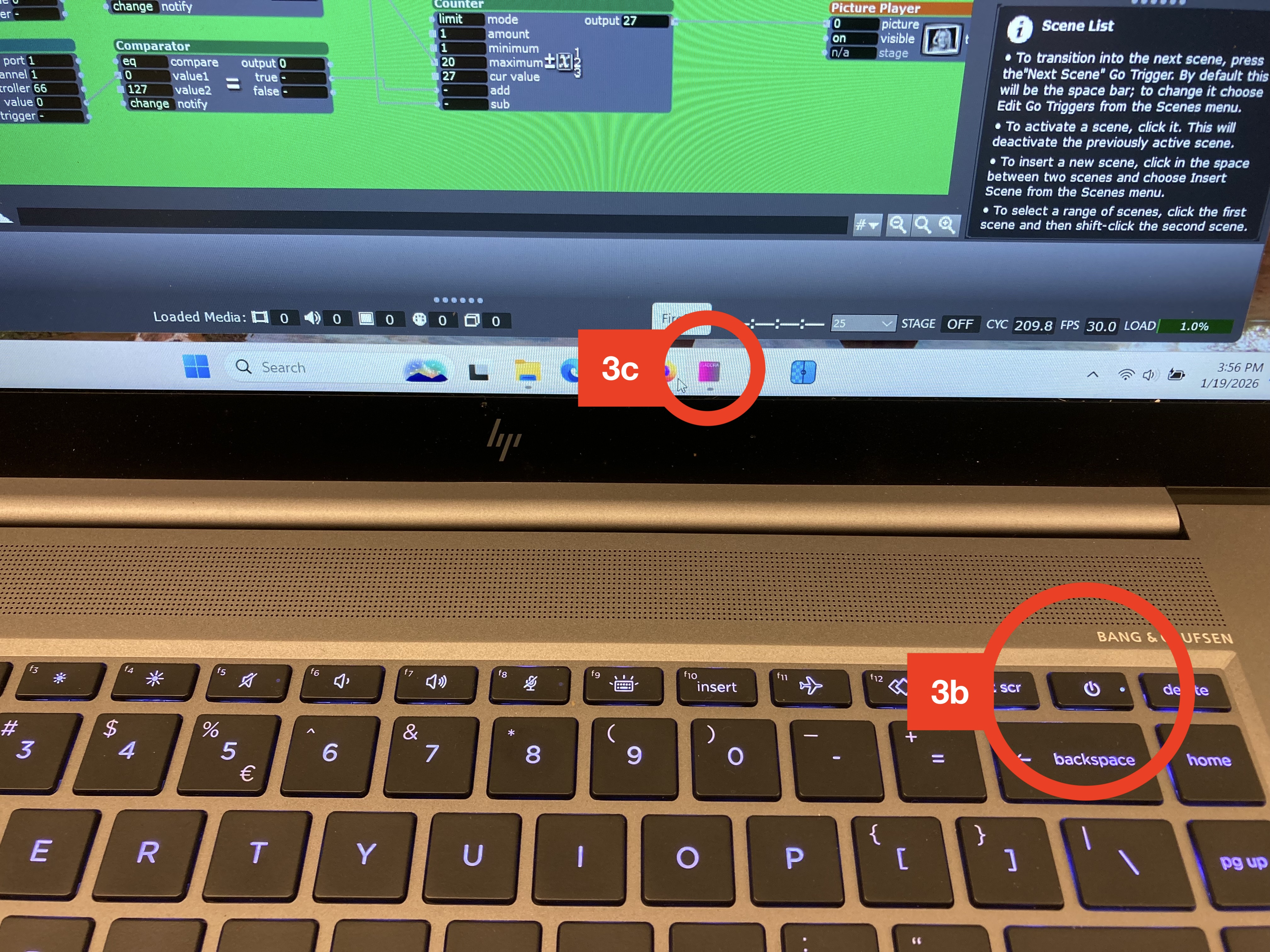
Plug in the blue USB cable before starting up the computer (3a). Start up the computer (3b) and log in (see usrnm & ww computer), and start up the Isadora software (3c)
4 Load controller preset
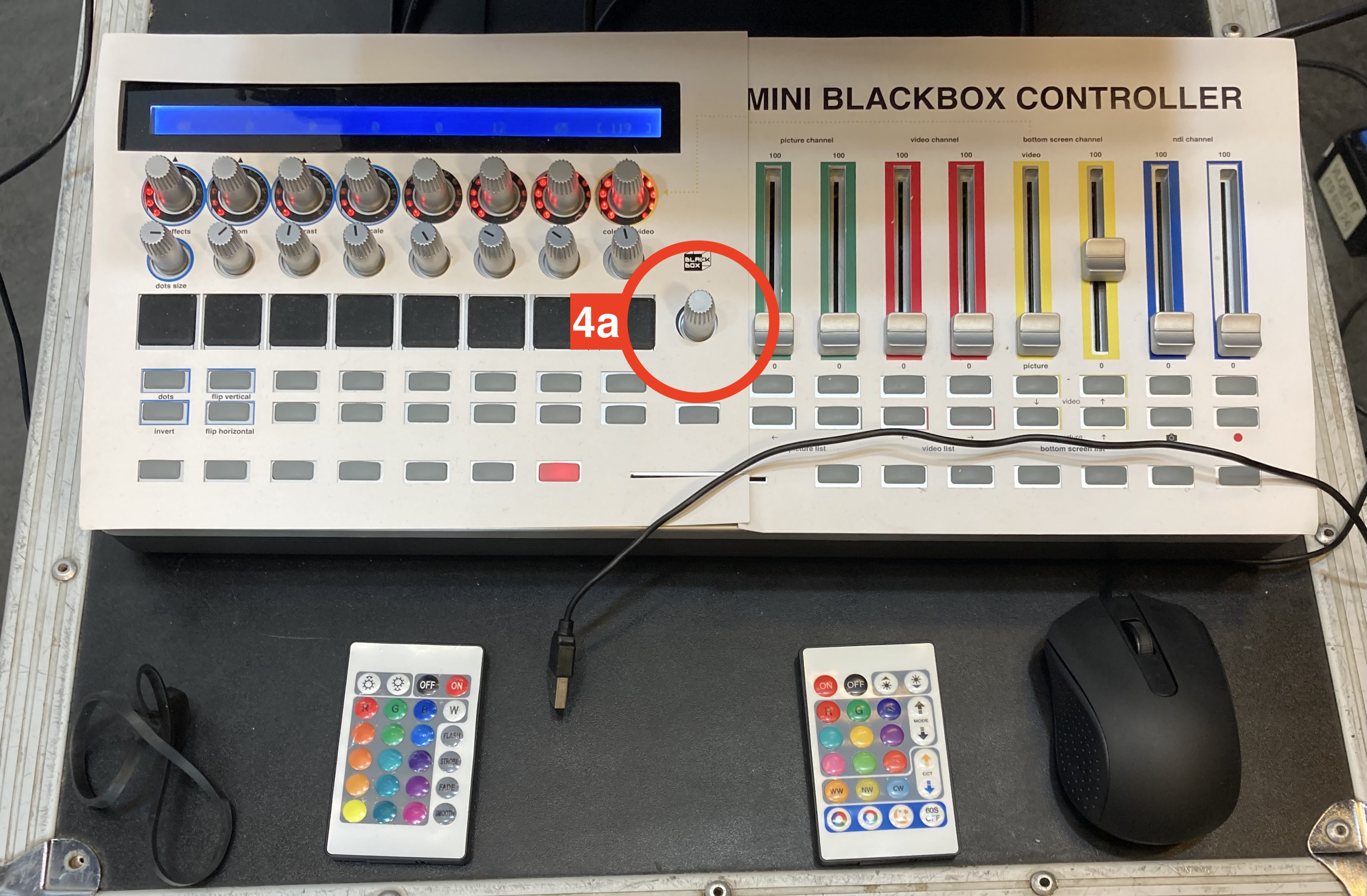
On the Midi controller press the “preset” button (4a) and select the template ON047 (see controller display). Mostly it is the default setting.
5 Open and create file
Double click on the Isadora file “Multiplane_template”, or open through it through the file menubar. Click away all notifications.
- 5a save this file in a newly created personal file and folder
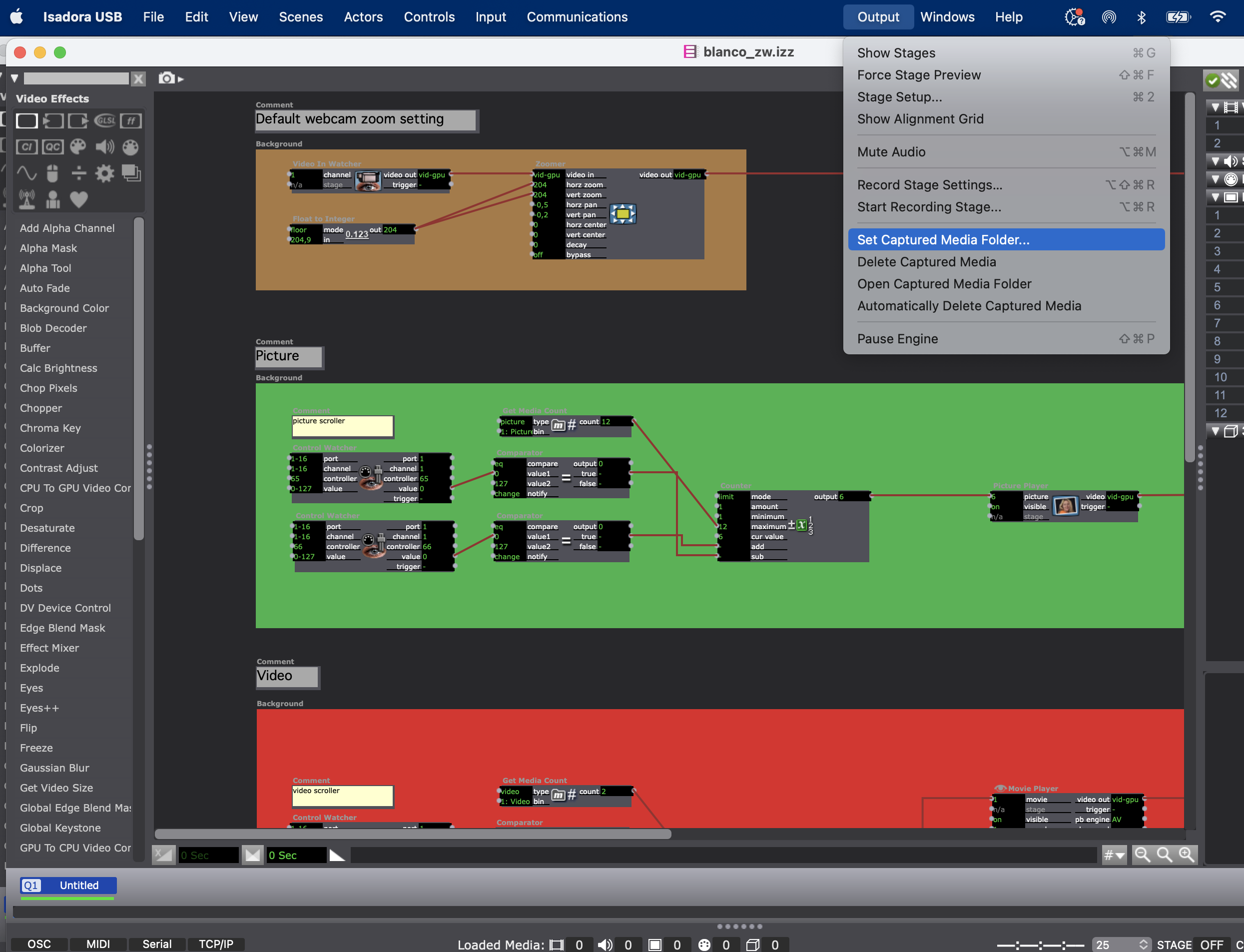
- 5b select the folder via the menu “output” and “set captured media folder”
6 Select camera
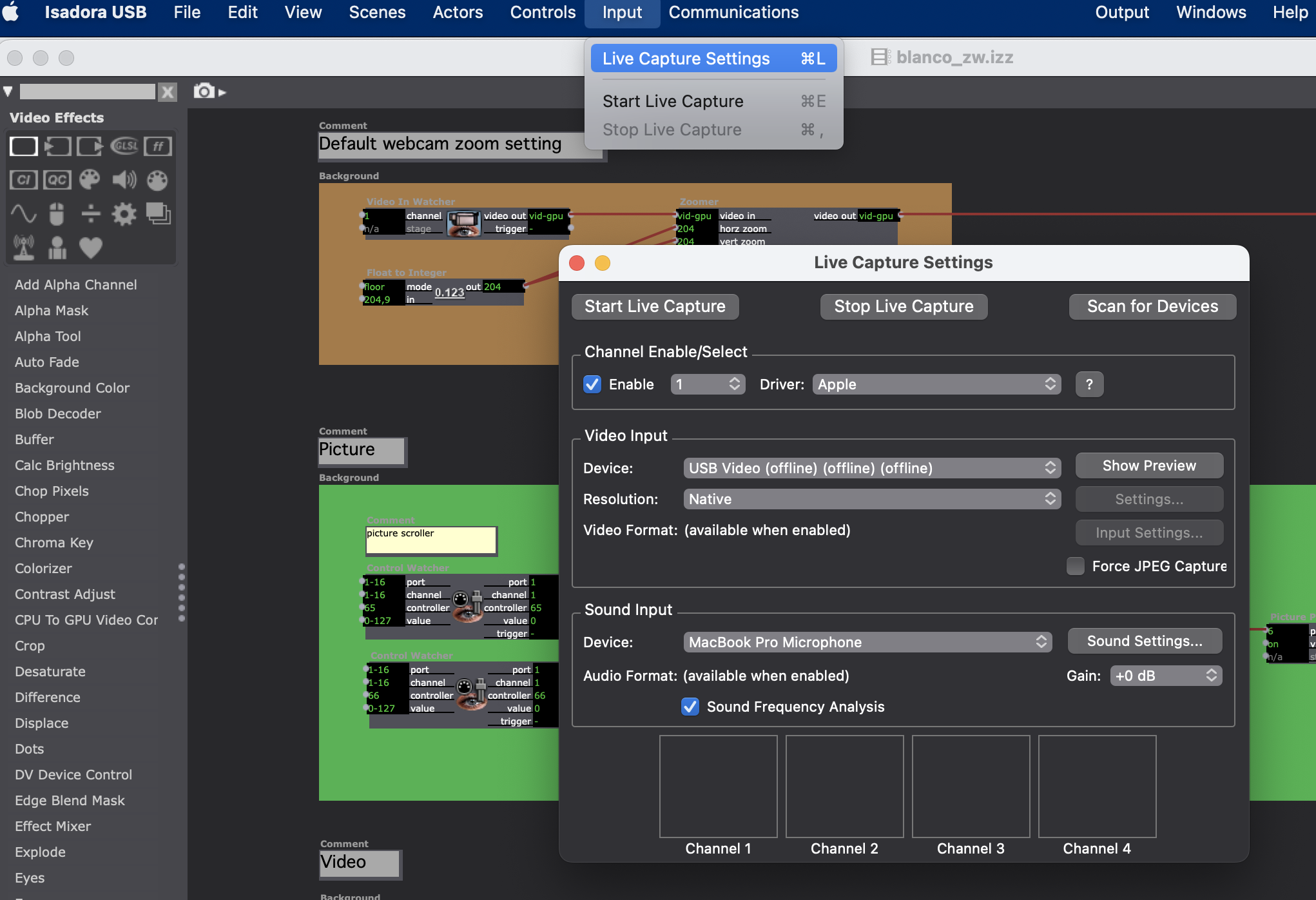
Go to “input” in the menu bar and click “start live capture”, and select the Logitech C920 webcam in the video/ device dropdown menu
7 Fill the screens
Go to “Output” in the menu bar and click twice on “Force stage preview” (or shift + command + F)
8 Controlling the Logitech webcam
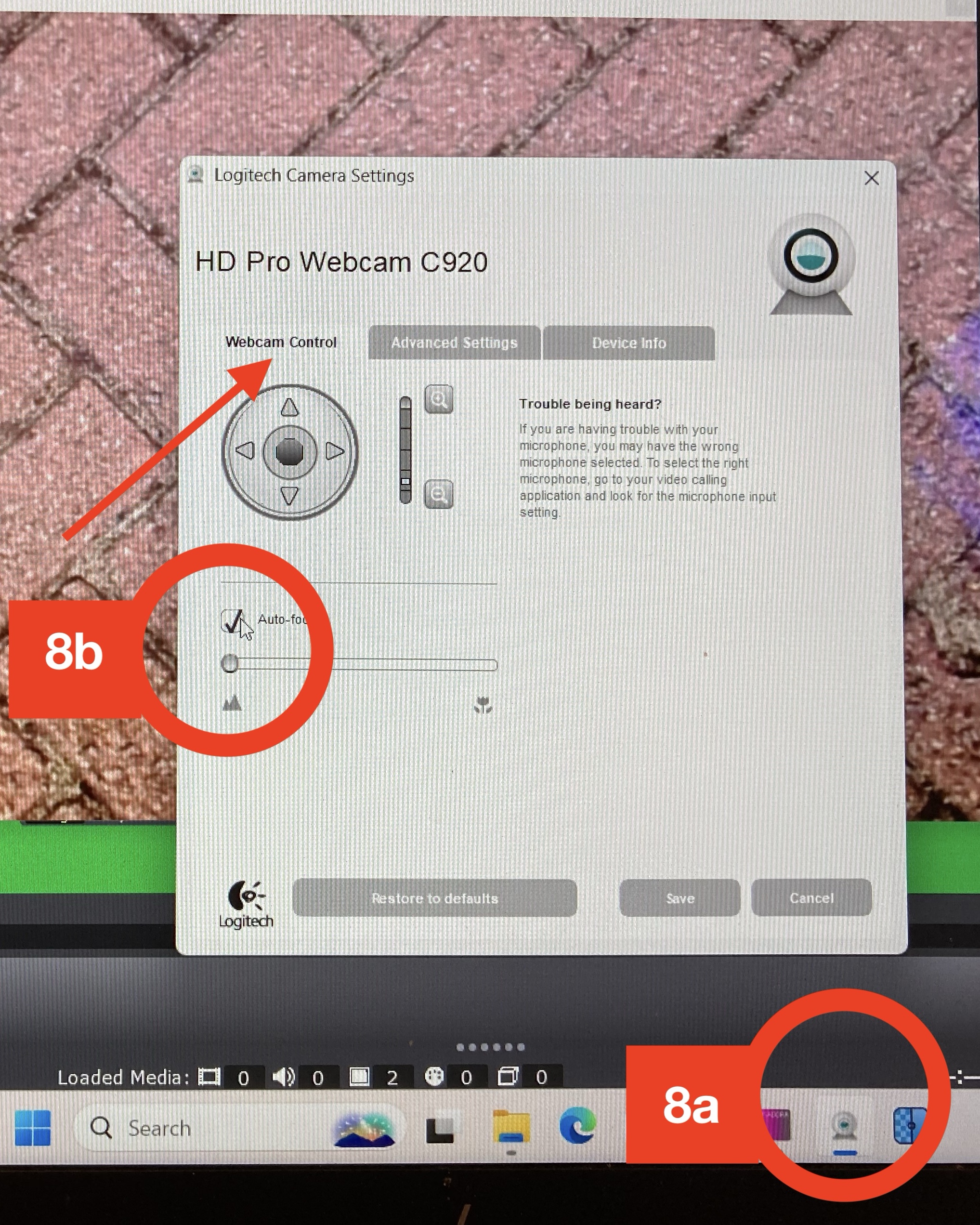

To prevent the camera from auto focussing and auto adjusting the white balance, you can run the control software (8a) and switch off the automode (8b and 8c). Now you can mannually control the focus and white balance according to your needs.
9 Controller parameters
Now you can start adding materials to the multiplane cabinet and tweak and record with the controller following the hand out below.
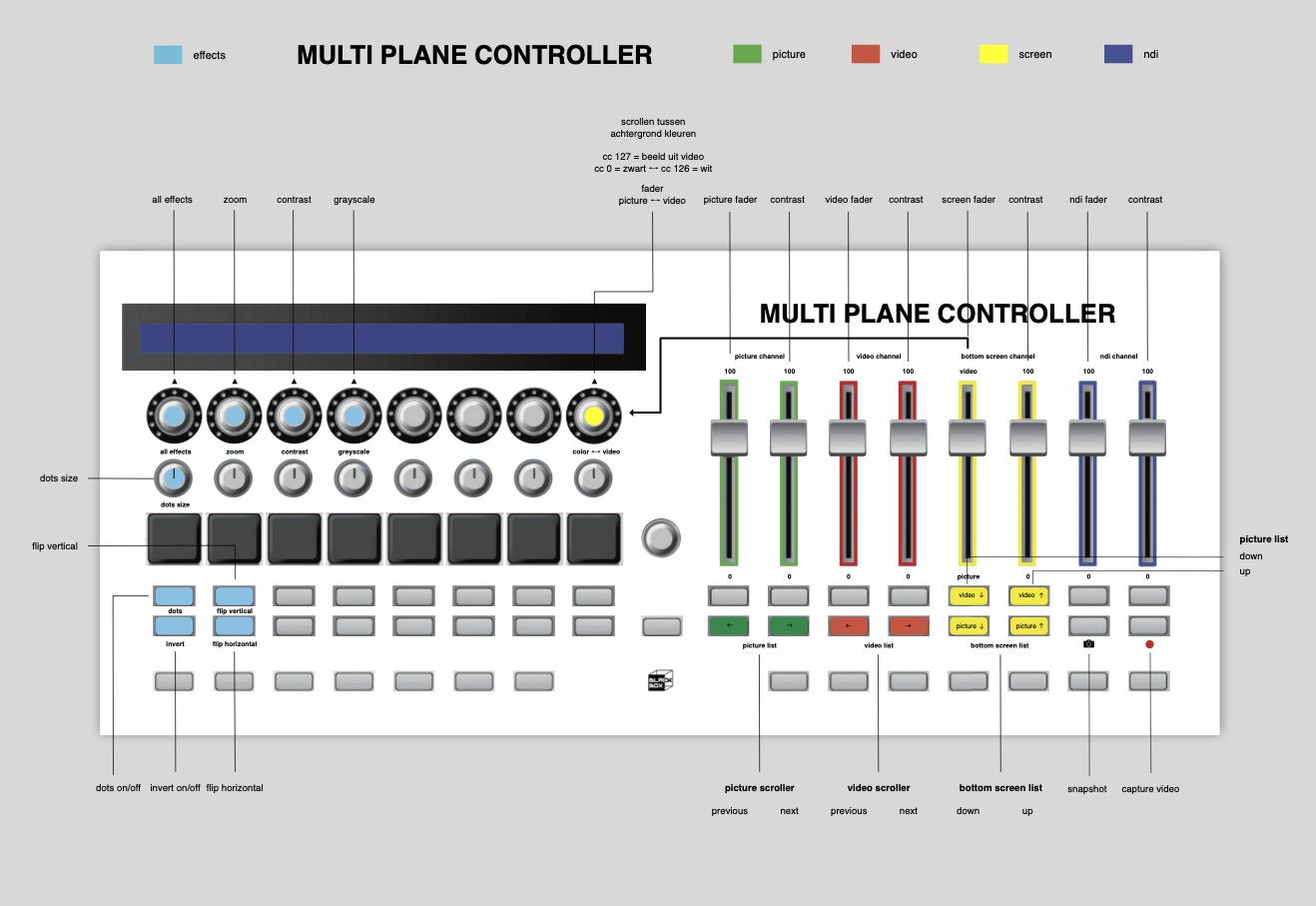
And now start creating!
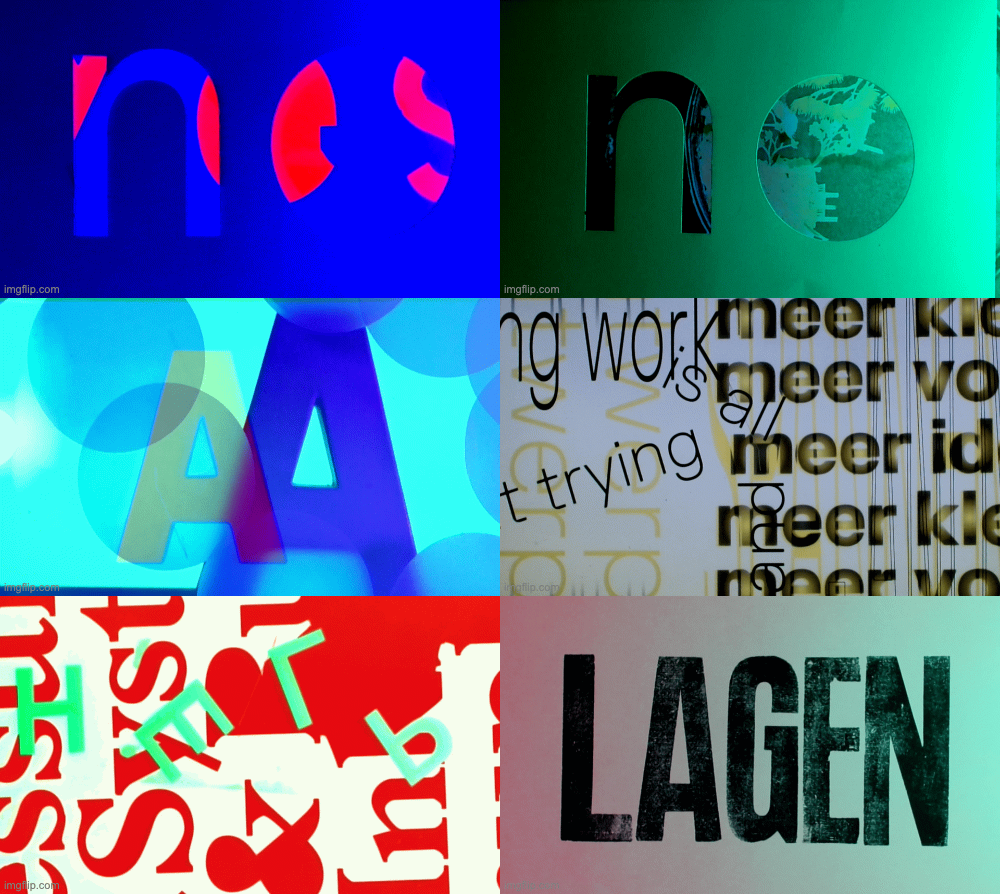
Upscale and print your multiplane images
General
This page describes a method to make your multiplane images suitable for printing. It consists of two steps, namely upscaling and an automated process to prepare your document for printing in SRA3 format
Upscaling
The images created with the multiplane are captured with a resolution of 1920 x 1080 pixels. This resolution is not very suitable for printing. A way to to make it more suitable for printing is to use an AI upscaling tool. Upscaling tools come as free or payed browser based services, standalone applications or as a toolset within software like Photoshop.
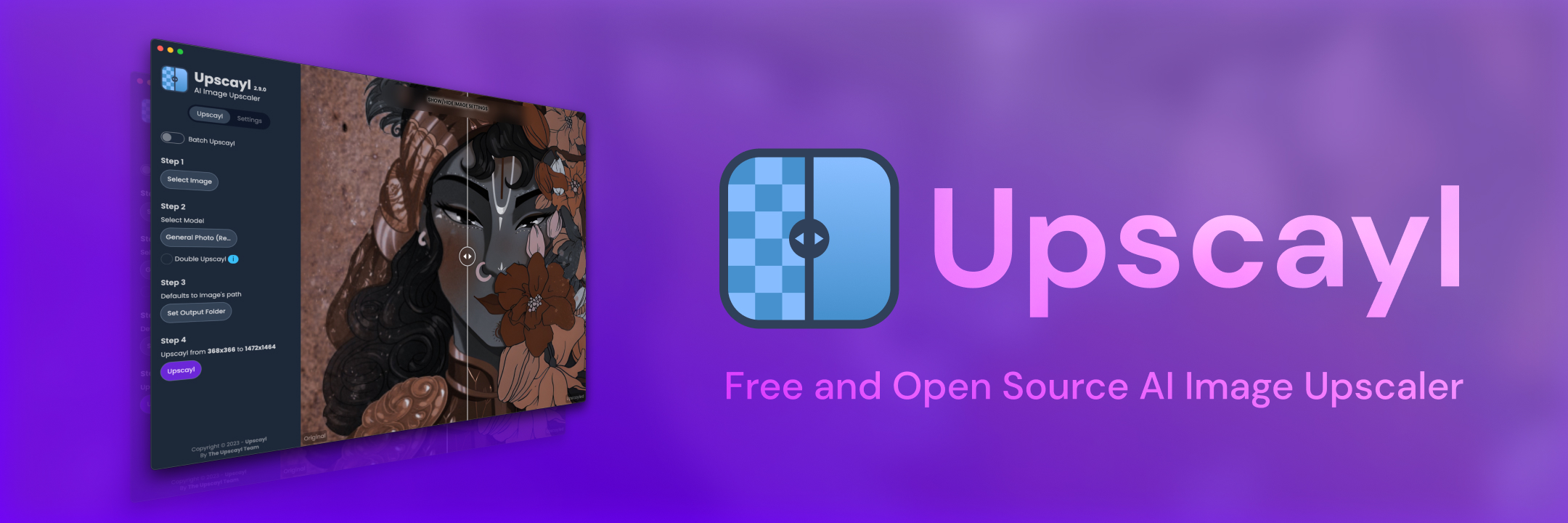
Below we wil use a method of upscaling with the free standalone, opensource cross platform application called Upscayl. It can be downloaded from: https://upscayl.org/download
or via their Github repository: https://github.com/upscayl/upscayl/releases/tag/v2.15.0
Upcale process steps
The next steps wil explain which upscaling settings to use. Drag the multiplane footage into Upscayl. The milages will vary, but we achieved the best results with one of the following AI Models: Remacri (boosts the image resolution without to many changes or artifacts) or Digital Art (smooths out the lo-fi artifacts within the source material and gives it a light vectorized look). Set image scale to 3x and set the output folder. click Upscayl and wait.
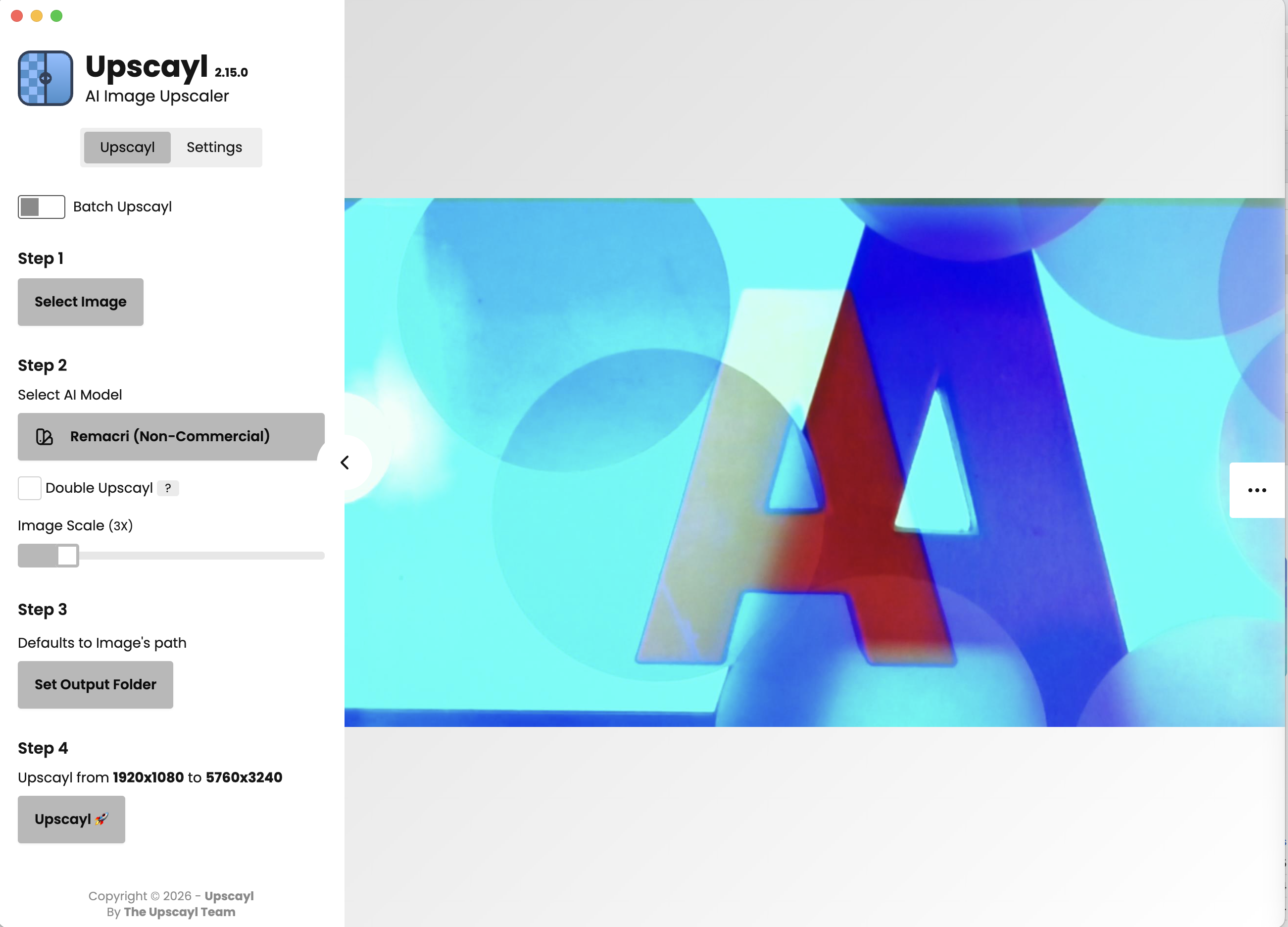
Upscayl GUI with advised settings original image file
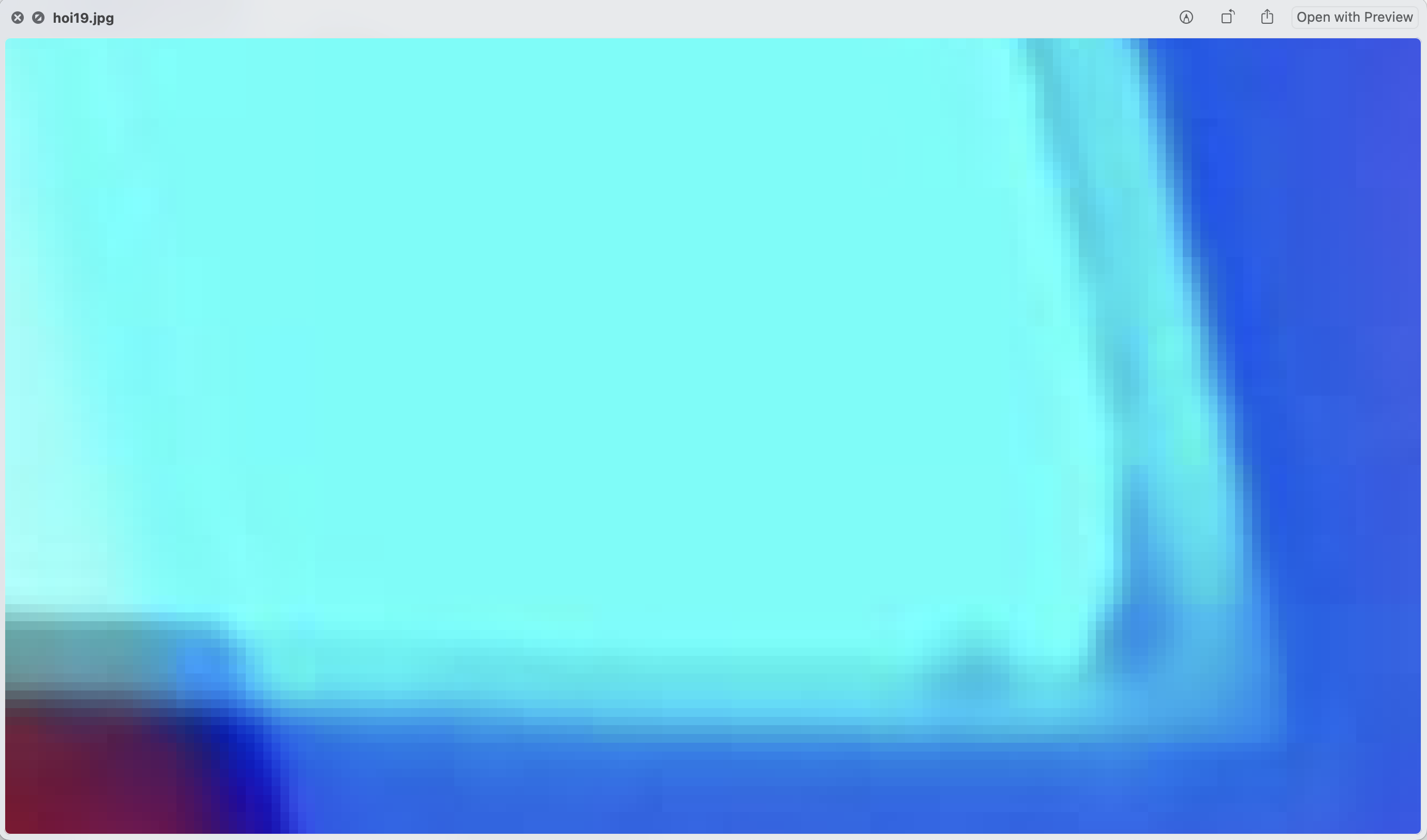
Detail original resolution
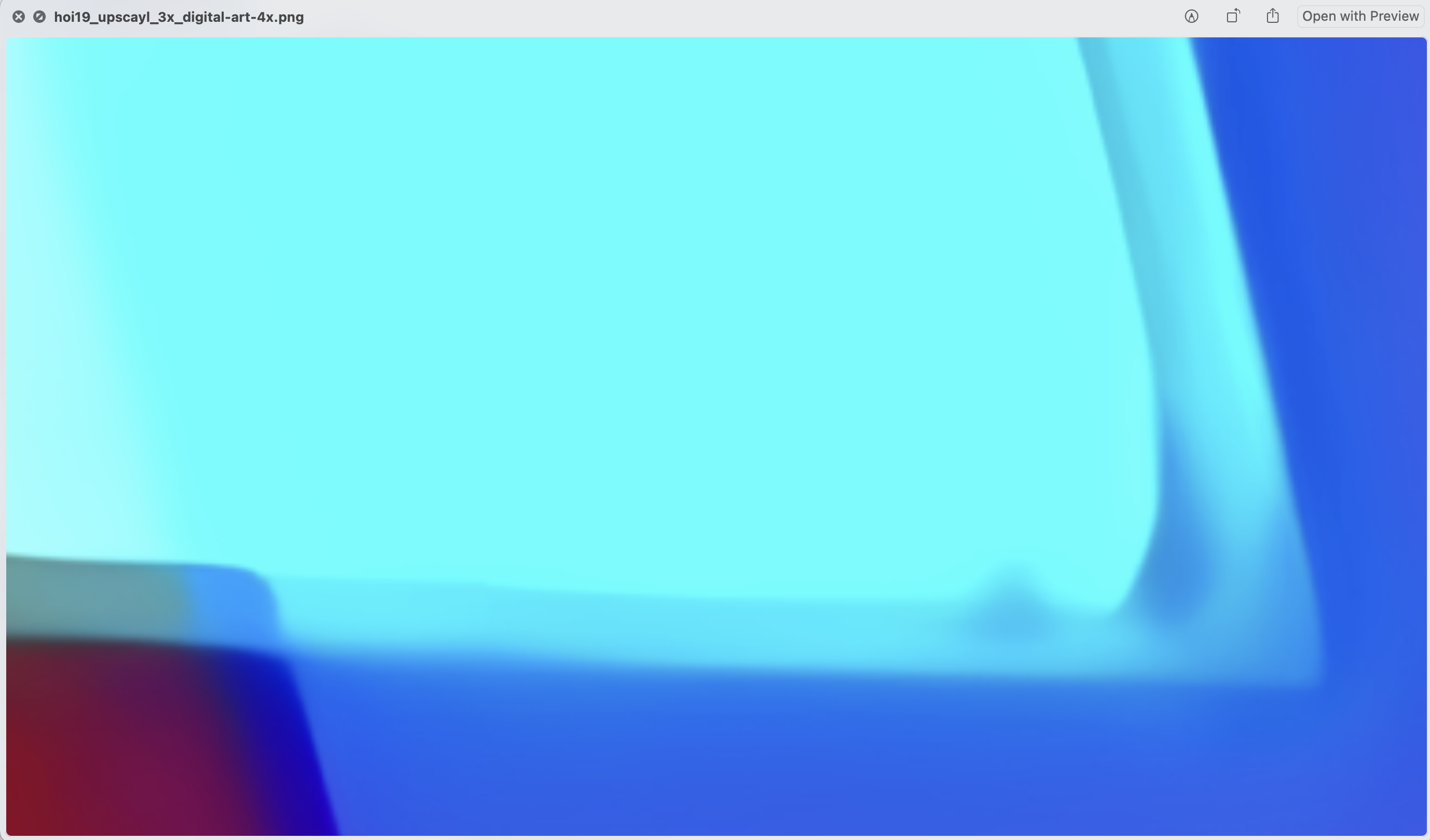
detail upscaled image with Digital Art model
Make it print ready
To prepare your upscaled image for printing, we can run te image through an automated process via the free XnConvert application. This software allows for batch processing images and lets you do most conversion steps as in Photoshop. The software can be downloaded here: https://www.xnview.com/en/xnconvert/

Image conversion steps
To prepare your document for printing, follow the instructions below.
Select the first tab (fig. 1) and drop your image files or folder in the blank space and select the correct preset in the window below. You can download the preset via this link Convert_preset_upscayl_en_print.xbs. It is also possible to make a 'hot folder' where files are automatically converted when dropping the files in that designated folder. The XnConvert application must be running in the background.
Crucial Setup Rule: To prevent an infinite loop, always set your Output folder to a different location than your Input (Hot) folder.
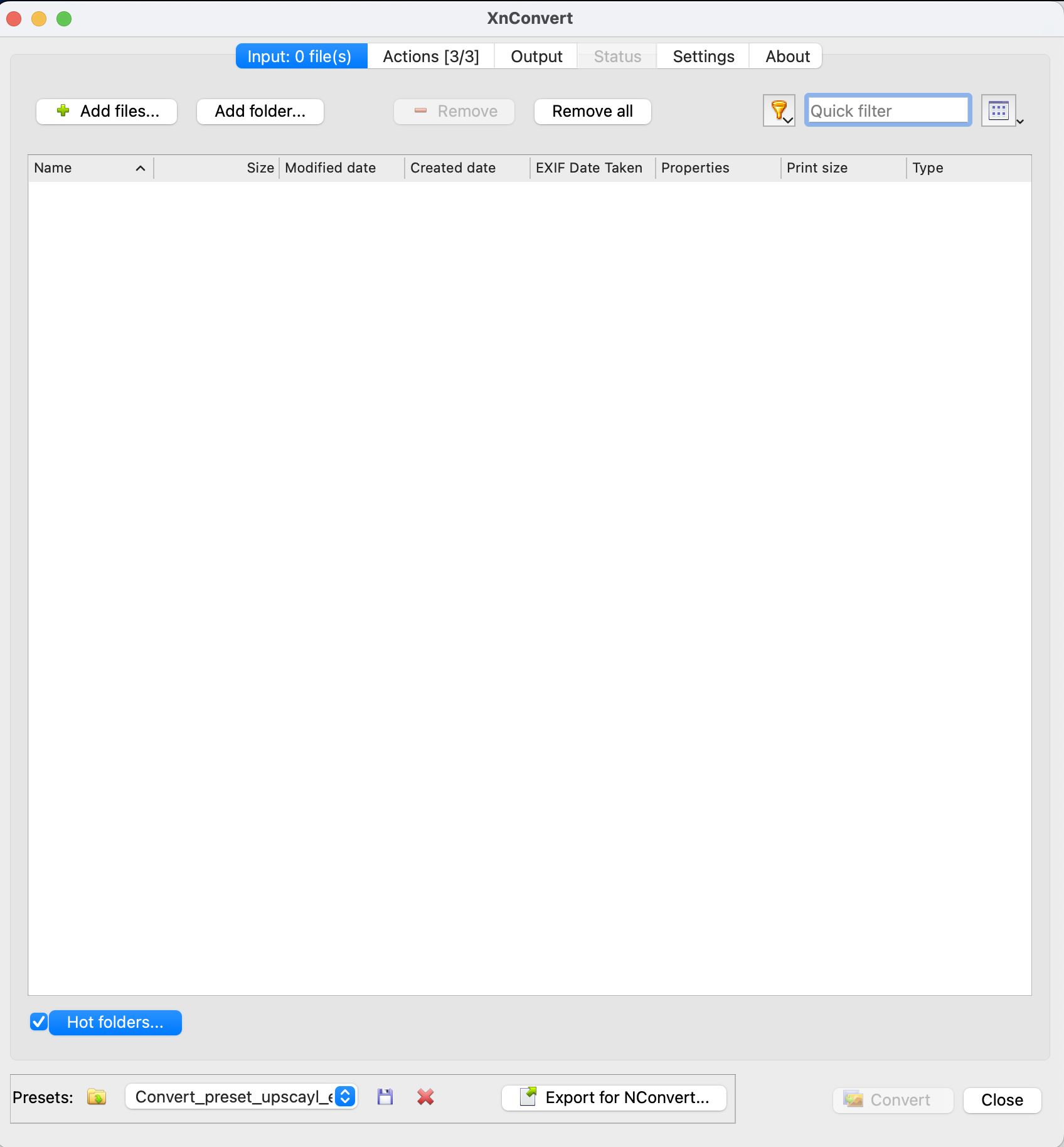
fig. 1
Go to the next tab 'actions' (fig. 2) to check if the presets contain all the steps below to make your print ready. Off course it is also possible to manually add or customize the actions. See picture below for the correct settings.
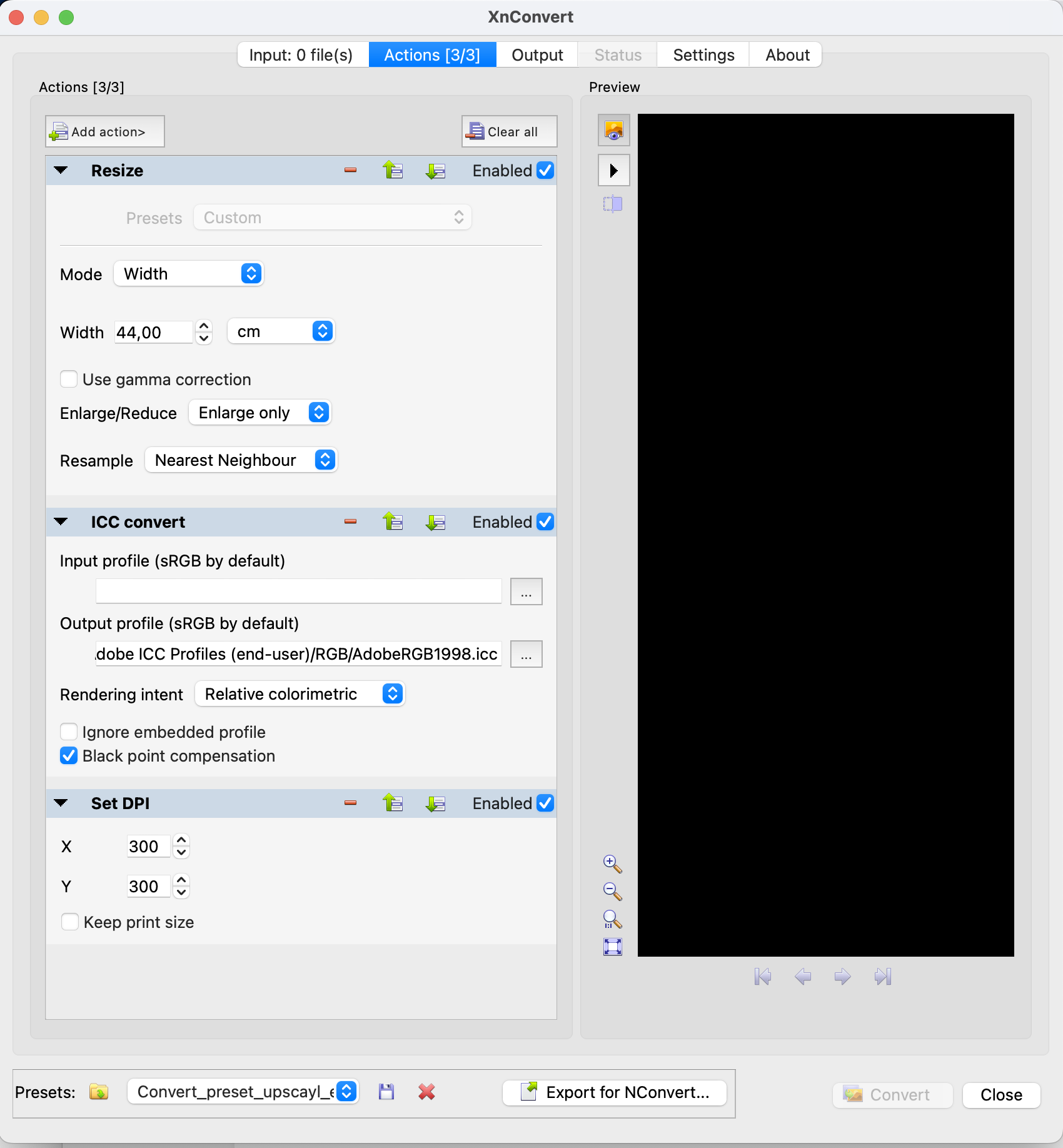
fig. 2
The last step (fig. 3) is to select the correct output folder and format and, if desired, add some more custom settings.
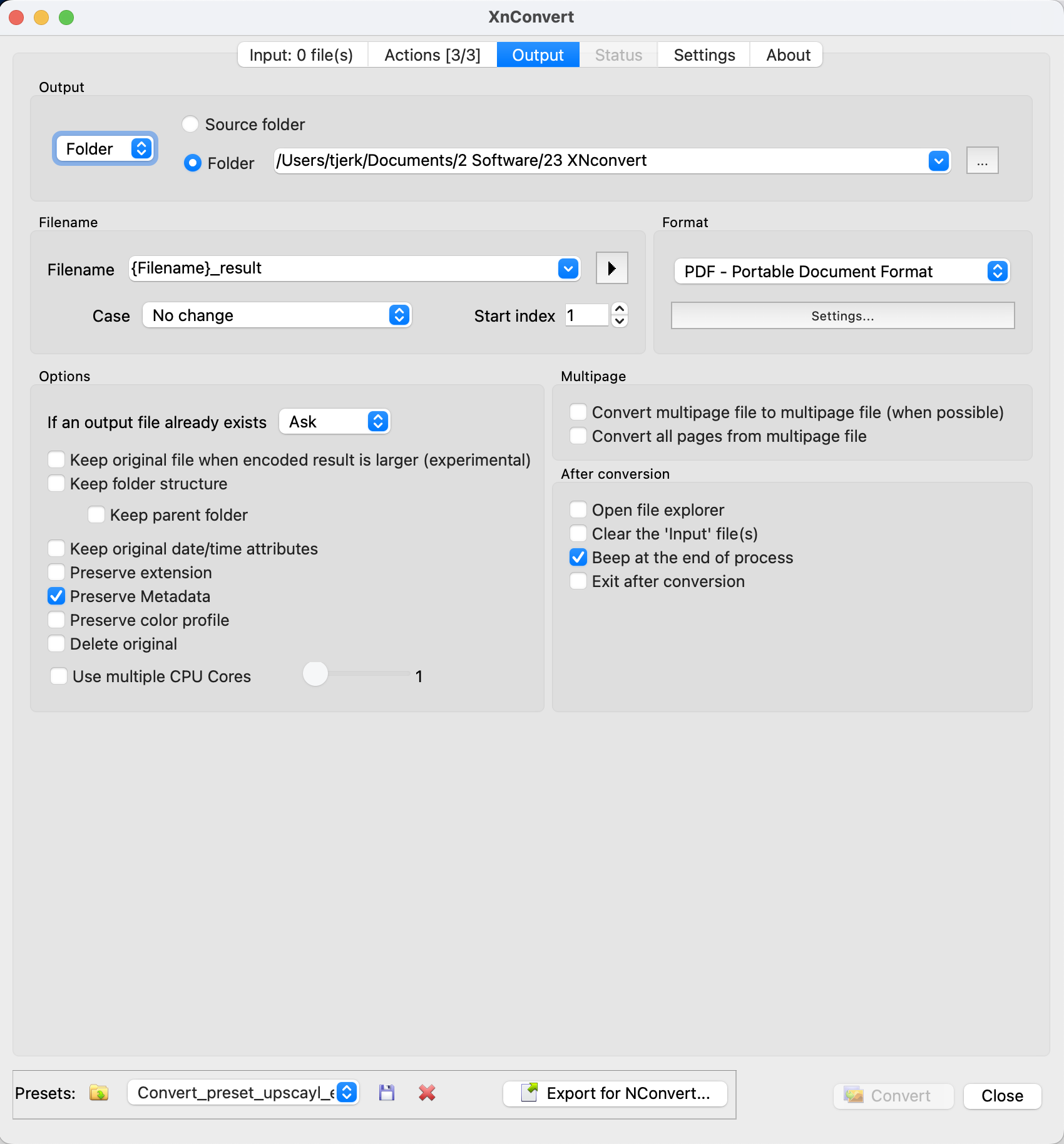
fig. 3